From Alexandria to the NBA: The inspiring Journey of Earl Lloyd
Earl Lloyd: A Pioneer in the World of Basketball

Early Years and College Success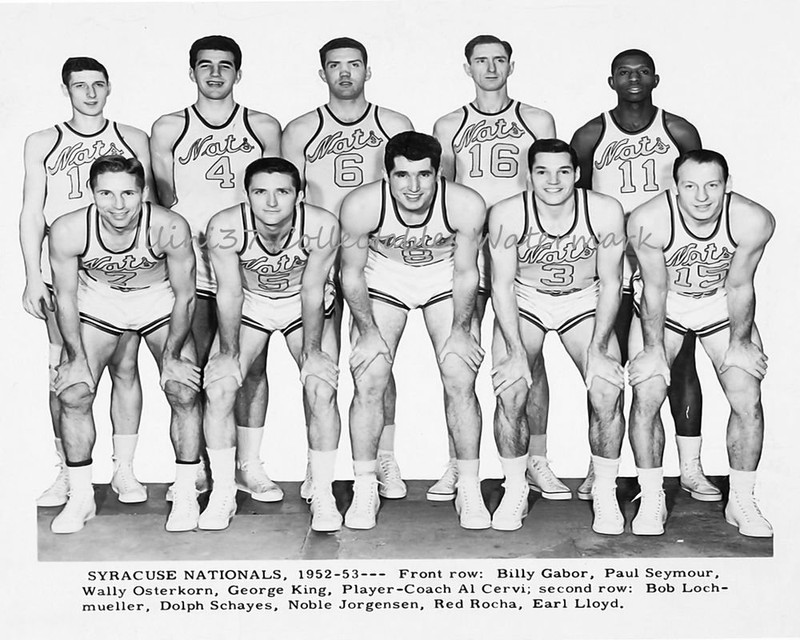
Lloyd attended West Virginia State University (WVSU) after graduating high school in 1946. Standing at 6'5, his quick thinking and defensive skills led WVSU to two CIAA Conference and Tournament Championships in 1948 and 1949. His outstanding performance earned him All-Conference honors three times and All-American Honors twice. Lloyd graduated from WVSU with a B.S. degree in Physical Education in 1950.
Breaking Barriers in the NBA
in 1950, Lloyd was among the first free black players to be drafted into the NBA, signing with the Washington Capitols (Now the Washington Wizards). On October 31, 1950, He made history by becoming the first black player to play in an NBA game. His journey was temporarily interrupted when he was drafted into the U.S. Army in 1951, where he won four U.S. Army basketball titles.
Return to the NBA and Championship Glory
Upon returning to the NBA, Lloyd joined the Syracuse Nationals, in 1955, he made history again by being part of the team and won the NBA title, making him the first African American to achieve this feat. That same year, he averaged 10.2 points and 7.7 rebounds pregame for Syracuse, ultimately defeating the Fort Wayne Pistons in a thrilling seven-game series. Lloyd concluded his professional career with the Detroit Pistons, playing from 1958 to 1960 with a career average of 8.4 points and 6.4 rebounds per game.
Legacy and Recognition
Lloyd's contributions to basketball and his groundbreaking achievements did not go unnoticed. In 1988. his name appeared on the popular television quiz show "jeopardy!", his legacy will always be in sports history.
Earl Lloyd once said: "It's not about you anymore, you've done all you have to do. Now it's time to go thank your folks who fought for you being there."
His life and career stand as a testament of time, and the power of breaking barriers.


Comments
Post a Comment